Shining Nikki-Fashion Makeover
- 4.1
- Rating
- 1.00M
- Installs
- Free
- Price

 Analysis by App-foxy
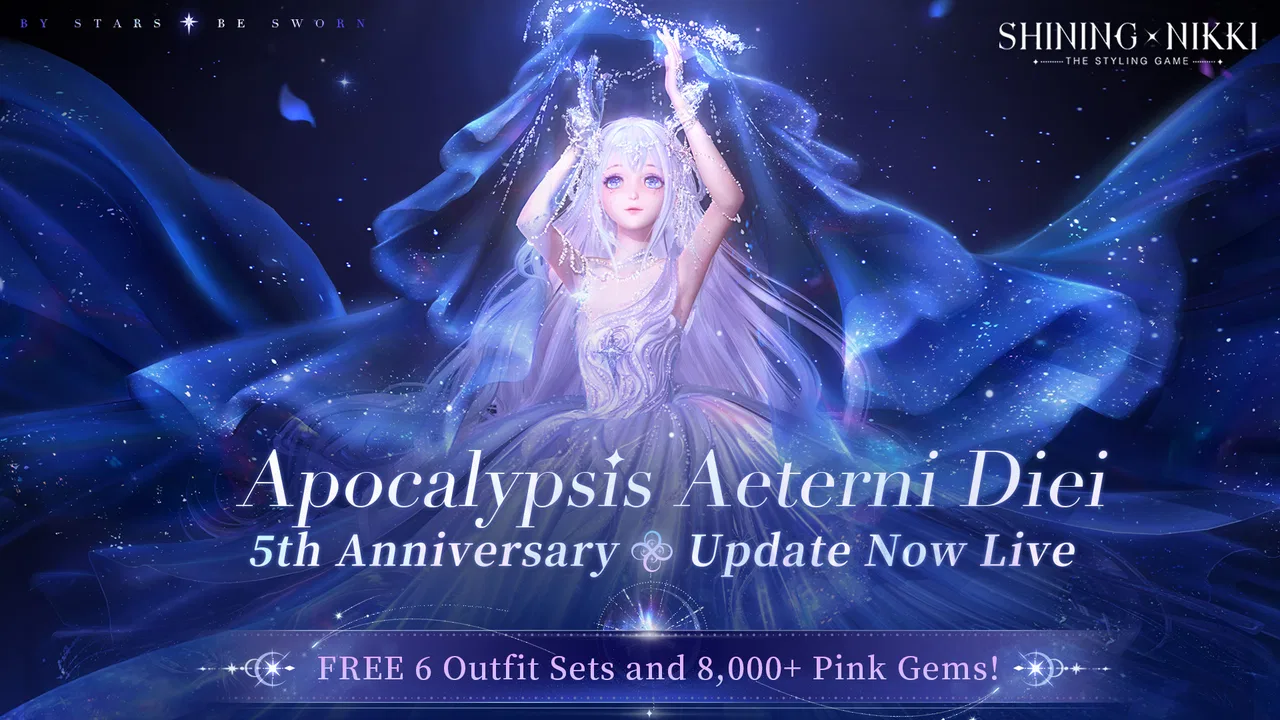
I went into Shining Nikki-Fashion Makeover expecting a dress-up game with a story attached, but it quickly showed me that its real appeal is the combination of styling decisions, character progression, and a very polished presentation. It is a role-playing game from Papergames, available for free, and it works best when I treat each outfit as both a creative project and a practical answer to the challenge in front of me.
The basic idea is easy to understand: Nikki travels through a fashion-focused world, collects clothing, changes her appearance, and takes part in encounters where the strength and theme of an outfit matter. That familiar foundation is presented with a more substantial structure than a simple wardrobe app. I am not only matching colors for a screenshot; I am also managing a growing collection, improving useful pieces, following the story, and deciding when a new item is worth my attention.
How the everyday styling loop feels
My usual session starts by checking what the current objective wants from me. Instead of immediately choosing the most attractive outfit, I first look at the requested style and the scoring context. This small habit saves time because a beautiful combination can still perform poorly when it ignores the encounter’s main direction. I then build around the strongest relevant pieces I own and use accessories to close obvious gaps.
You May Also Like

 Blood Strike: 2.5 Anniversary
Blood Strike’s Loadouts Turn Every Drop Into a Tactical Gamble
A close look at Blood Strike’s custom loadouts: how fast access to signature weapons reshapes its battle royale rhythm, rewards preparation, and narrows the gap between fights.

 Pandora - Music & Podcasts
Pandora’s Music Is Easy to Start, but Harder to Recover
Pandora’s strength is its low-effort path from a seed to a station. Its weak spot is how much confidence it asks you to place in connection, setup, and quiet recovery.

 8 Ball Pool
 Is Built on Rivalries, Rematches, and Routine
A close look at the rivalries, rematches, shared routines, and unanswered safety questions that turn a quick pool match into a persistent mobile community.

 Samsung Music
’s Quiet Strength Is Playing What You Already Own
Its reach comes less from spectacle than from dependable access to a personal library. That simplicity is both the app’s strongest retention engine and its ceiling.

 AccuWeather: Weather Radar
AccuWeather Review: A Quick, Clear Forecast for Everyday Decisions
For everyday plans, the best forecast is the one you can understand quickly. AccuWeather makes rain timing, radar, and local conditions easy to act on, with a few trade-offs.

 Hill Climb Racing
Why Hill Climb Racing Still Turns Crashes Into One More Run
A tiny car, a bumpy hill and one more upgrade: Hill Climb Racing keeps resurfacing because its simple chaos makes every near-miss feel personal.
More From Our News Desk



The first few minutes are especially friendly to players who enjoy experimenting. Nikki’s appearance can be changed in several visible ways, and the game makes the result feel more personal than simply swapping a shirt and skirt. Hair, clothing, accessories, and presentation work together, so I often create a look that I would never have planned from a single item. The visual payoff is immediate, which makes collecting feel connected to creativity rather than just inventory growth.
What I like most is that the wardrobe gives me two different reasons to care about an item. One reason is visual: a piece may complete a theme or make a character look much better. The other is functional: it may be the missing part of a stronger outfit for a particular challenge. Experienced play comes from recognizing both values instead of automatically replacing everything with the newest reward.
A realistic everyday scenario is a short evening session after work or school. I might have only enough time for a few stages, so I focus on the current story objective, improve one useful outfit, and spend the remaining minutes browsing clothing for a future theme. That feels more satisfying than rushing through every available activity, because I finish with a clearer plan rather than a crowded wardrobe I have not learned to use.
The role-playing side also gives the game more direction than many traditional dress-up alternatives. Progress is not limited to taking attractive pictures or completing a collection. Story chapters and challenges create reasons to return, while the styling system gives those activities a recognizable identity. Players who want a purely relaxed fashion sandbox may find the progression structure more demanding than expected, but I think it helps prevent the wardrobe from becoming decorative and forgettable.
What I check before spending resources
My most useful baseline rule is to avoid upgrading items simply because they look impressive. I first ask whether the item fits a style I use often, whether it completes a set of choices I already own, and whether it helps with an immediate obstacle. This is a better long-term habit than trying to make every garment equally strong. Resources feel more valuable when I reserve them for pieces that solve a real problem.
I also separate experimentation from progression. When I am trying to clear a challenge, I use the wardrobe’s practical side and choose compatible pieces quickly. When I am creating a look for enjoyment, I ignore the score and test unusual combinations. Mixing those two moods can be frustrating: a creative outfit may not be efficient, while an efficient outfit may not be the one I want to remember.
One non-obvious advantage of this approach is that it makes weaker items easier to evaluate. A garment that is not useful for the current stage may still have value as a color anchor, a finishing accessory, or part of a future theme. I do not discard an item mentally just because it loses a direct comparison. Fashion games reward patience more than constant replacement, especially when the collection becomes broad.
Another practical habit is to review the full look before confirming it. I check whether the hairstyle competes with the neckline, whether accessories make the outfit feel crowded, and whether the colors have a clear center. This matters even when the game is judging performance, because a visually coherent outfit is easier for me to remember and reuse. It also makes the customization feel like a creative tool rather than a sequence of disconnected selections.
Settings and presentation choices worth checking
I recommend spending a little time exploring the available settings before settling into longer sessions. A visually rich game can be more comfortable when the presentation matches the phone and the player’s habits. I pay attention to display quality, effects, sound, and notification-related choices where available, then adjust them according to whether I am playing at home or trying to conserve battery during a short break.
There is a clear trade-off here. The game’s appeal depends heavily on its detailed fashion presentation, so reducing visual quality may make it feel less special. On the other hand, keeping every demanding option active is not automatically the best choice for a longer session. I prefer a balanced setup that keeps clothing and character details attractive without making the device feel unnecessarily strained.
Sound deserves attention too. I often keep audio on when following the story because it gives the scenes more personality, but I lower it when I am repeating familiar tasks. That simple change makes routine play less distracting. It also helps distinguish between a session where I am absorbing the narrative and one where I am mainly collecting rewards or testing outfits.
Because the game is free to download, I would also decide early how I want to handle optional purchases. The available in-app purchase range runs from $0.99 to $99.99 per item, so the difference between a casual purchase and a large one is substantial. My advice is to treat spending as a personal limit set before playing, not as a response to a disappointing result or a tempting outfit.
This is particularly important for players who enjoy collecting. Fashion games can make every new piece feel meaningful, and that emotional pull is part of the fun. I get a better experience when I decide whether I am playing for story progress, styling creativity, or collection completion. Each goal creates different expectations, and knowing my goal makes it easier to stop when an offer does not fit my plan.
Faster patterns for repeatable progress
Once I understand the current objective, I use a simple repeatable pattern: identify the dominant style, select the strongest dependable pieces, fill missing slots, and only then refine the appearance. This is faster than starting with a favorite dress and trying to force the rest of the outfit around it. It also reduces the number of random combinations I need to test.
I keep a mental shortlist of outfits that work reliably for common situations. I do not need to memorize every item; I only remember which combinations are dependable and which pieces are flexible. When a challenge has a familiar direction, I begin with that foundation and make small changes instead of rebuilding from scratch. This is one of the easiest ways to make short sessions feel productive.
Another useful pattern is to improve one weakness at a time. If an outfit is already strong in its main category, I look for the most obvious missing element rather than spreading resources across several minor upgrades. That creates clearer progress and makes it easier to understand why a later attempt performed better. It also protects me from spending resources on improvements that are difficult to notice.
I use the same principle when browsing the wardrobe. Rather than scrolling without a goal, I look for a piece that can serve several themes or balance an existing color palette. Versatile items are more valuable to my play style than garments that look spectacular but only fit one narrow idea. This is a trade-off between collection excitement and practical flexibility, and the right choice depends on whether I care more about variety or efficiency.
For story sessions, I avoid interrupting the narrative every few minutes to redesign everything. I complete a small group of objectives first, then review the rewards together. This gives me a better sense of what the new items actually add to my collection. It also keeps the story moving, which matters because the role-playing structure is one of the reasons I prefer this game over a basic makeover application.
Players who mainly want screenshots can use a different rhythm. I would finish the necessary progression, then spend time arranging a look without worrying about its challenge value. The important point is to separate the score-driven workflow from the creative workflow. Doing so makes both feel better and avoids the common disappointment of judging an artistic outfit only by its practical performance.
Where the deeper systems become demanding
The game becomes less casual as the wardrobe expands. More choices sound ideal, but they also create decision fatigue. I sometimes spend longer comparing similar items than actually playing a stage. The solution is not to inspect everything every time; it is to establish trusted combinations and return to them when the objective is straightforward.
Collection-focused players should also expect a tension between wanting a complete wardrobe and wanting efficient progress. Free access makes it easy to begin without a financial commitment, but optional purchases can become tempting when a particular item feels perfect for a look. I think the game is most comfortable for people who can enjoy an incomplete collection without treating every missing piece as a problem.
The Teen content rating is worth keeping in mind when deciding whether it suits a younger player or a shared device. It also signals that this is not necessarily the same experience as a very simple children’s dress-up title. The presentation, themes, and progression have more maturity and complexity than a toy-like makeover app, so I would choose it for someone who wants a story-driven fashion game rather than only instant customization.
Device compatibility is relatively broad, with Android support beginning at version 7.0, but compatibility on paper does not guarantee the same comfort on every phone. I would leave room for the game’s visual workload and test a normal session before committing to long play. If a phone becomes hot, slows down, or loses battery too quickly, a more modest visual setup may be preferable to chasing the highest presentation quality.
The current version is 7.0.2608247, which is useful to check when troubleshooting or comparing the experience across devices. I would keep the game updated through the normal app store process, especially if a feature behaves differently after an update. Still, I would not assume that a newer version removes every inconvenience: a large wardrobe, resource planning, and purchase decisions remain part of the game’s basic character.
Compared with ordinary makeover apps, this is much better for someone who wants goals, progression, and a reason to return after the first styling session. Compared with a traditional role-playing game, it places far more emphasis on appearance, collection, and visual presentation than on combat or exploration in the usual sense. That middle position is its strength, but it also defines its audience. Players looking for fast action may find the pace too gentle, while dress-up fans wanting no structure may find the progression too involved.
I would skip it if I dislike repeated collection tasks, feel pressured by optional purchases, or want a game that can be understood entirely in a few minutes. I would also choose a simpler alternative if my main goal were quick offline-style outfit creation without story progression. The game asks me to invest attention in its systems, and that investment is worthwhile only when those systems sound enjoyable.
My mastery verdict after settling into the routine
After learning its rhythm, I see Shining Nikki-Fashion Makeover as a strong choice for players who want fashion to be the center of a role-playing experience. The best results come from small habits: read the objective before styling, build around reliable pieces, upgrade with a purpose, separate creative sessions from score-focused sessions, and set a spending boundary before browsing optional content.
Its presentation is the immediate attraction, but the lasting appeal comes from the decisions behind each outfit. I enjoy having to balance visual taste with practical value, even when that balance occasionally makes the game feel more complicated than a standard dress-up app. The collection can become overwhelming, and players who want a completely pressure-free experience may need to play selectively rather than trying to complete everything.
The game has built a sizable audience, with an average rating of 4.1 from around 44 thousand ratings and more than 1 million installs. Those figures match my impression that it is not a niche wardrobe toy: there is enough role-playing structure to keep committed players involved, while the styling remains approachable at the start. Papergames has made the fashion system the main event instead of treating it as a small extra attached to another genre.
For me, the deciding question is simple: do I want to collect and style with a purpose, or do I only want to dress a character for a few minutes? If the first answer is yes, the free entry point makes it easy to try, and the story gives the wardrobe context. If the second answer is yes, a lighter makeover app may be a better match. I recommend this one to friends who enjoy beautiful outfits but also like learning a repeatable system and gradually making better choices.
My final recommendation: try it as a structured fashion RPG, not as an endless catalog of costumes. Give the opening progression time, adjust the presentation to suit your device, and judge purchases by your own goals rather than by collection anxiety. When I play that way, the game feels generous in creativity, satisfying in its small improvements, and honest about the fact that mastery comes from knowing when to optimize and when simply to enjoy the look.
FAQs for Shining Nikki-Fashion Makeover
01What is Shining Nikki-Fashion Makeover?
Shining Nikki-Fashion Makeover is a 3D fashion role-playing game focused on styling, storytelling, and character customization. You guide Nikki through a visually detailed adventure, collect outfits, complete fashion challenges, and participate in story chapters and events. The game combines dress-up mechanics with exploration, dialogue, battles based on styling scores, and a large collection of accessories and clothing items.
02Is Shining Nikki-Fashion Makeover free to download and play?
Yes, Shining Nikki-Fashion Makeover can be downloaded and played for free, although it includes optional in-app purchases. Players can progress without paying, but premium currency, special outfits, event items, and certain convenience features may be available through purchases. The game also uses energy and other progression systems, so free players should expect to manage resources and wait between some activities.
03Does the game require an internet connection?
An internet connection is generally required for Shining Nikki-Fashion Makeover because the game connects to online servers for account data, events, updates, rewards, and downloadable content. It is not designed as a fully offline experience. A stable Wi-Fi or mobile data connection is recommended, especially when downloading its large visual assets or participating in time-limited activities.
04What devices are compatible with Shining Nikki-Fashion Makeover?
Compatibility depends on the operating system, device model, available storage, and the requirements listed on the official Google Play Store or Apple App Store page. Because the game features high-quality 3D graphics, newer phones and tablets usually provide a smoother experience. Before installing, make sure your device has sufficient free storage, updated software, and enough memory to handle the game comfortably.
05Is Shining Nikki-Fashion Makeover suitable for children?
Shining Nikki-Fashion Makeover is primarily a fashion and story game, but parents should review its age rating and online features before allowing younger children to play. The title may include optional purchases, social or account-related functions, fantasy themes, and frequent event promotions. Using parental controls and disabling unauthorized purchases is advisable, particularly on shared devices or family accounts.
Pros
- High-quality 3D visuals make outfits and character details look impressive.
- Large wardrobe offers plenty of options for creating personalized looks.
- Story chapters add context and goals beyond simply dressing characters.
- Regular events provide fresh outfits
- challenges
- and limited-time rewards.
- Fashion battles make styling choices feel meaningful and competitive.
Cons
- Large downloads and frequent updates can consume considerable storage space.
- Many premium outfits require paid currency or significant time to obtain.
- Limited-time events may pressure players to spend before rewards disappear.
- Gameplay can become repetitive after completing the available story content.
- An internet connection is required for most features and progression.

Shining Nikki-Fashion Makeover
Gallery